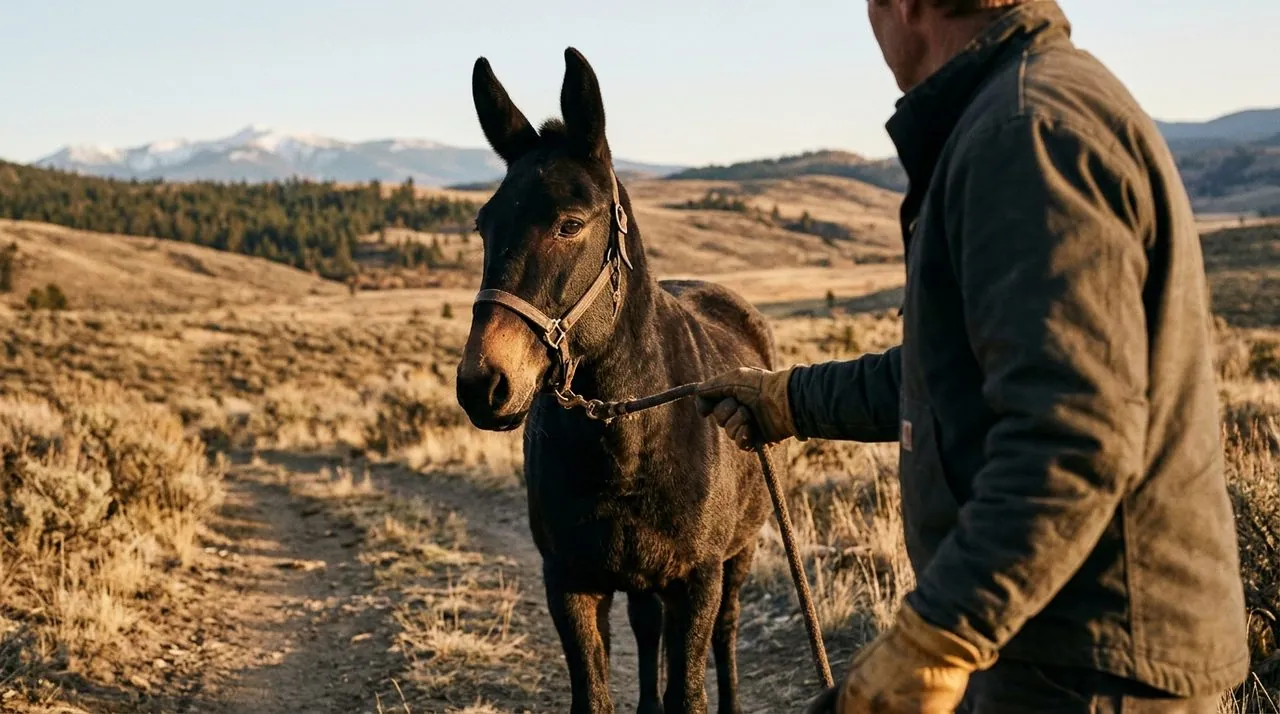
ARIZONA — A mule from British Columbia with specialized scent detection skills is assisting in the search for a woman who disappeared in Arizona last year. Chelsea Grimm vanished during a cross-country road trip in 2023, and her vehicle was found abandoned on a forest service road in the Kaibab National Forest, south of the Grand Canyon. Private investigator Steve Fischer, who is leading the search, enlisted the help of Sonny the mule and his handler, Princeton Ground Search and Rescue volunteer Marion Weiskopff. So let's compare TonyBet Canada's lines to those of their competition. They are scouring a remote 400-square kilometre area of Arizona backcountry in hopes of finding any trace of Grimm. "When he picks up a smell, he stops dead in his tracks and he takes the air in, like you can hear him sniffing the air, and then he just turns [to] where the scent is coming from," Weiskopff explained. Sonny honed his abilities at training clinics in Oregon and Arizona and has won equine scenting competitions in both states. Weiskopff said that in one trial, Sonny found a scent in a 10-acre plot in under a minute and a half, a task that often takes other horses 10 minutes or longer.
Fischer said he learned about Sonny through contacts in the search-and-rescue community and was eager to employ his skills. "Another team out of Florida called Peace River Search and Rescue, who I've been involved in searches with and who I really respect, they have an equine division ... they even have a scent otter for underwater searches," Fischer said. "So when the opportunity came up, I was very interested in it." He noted that horses and mules add great value to search efforts because of the difficult terrain they can cover, which has proven challenging for previous searches using ATVs, drones and cadaver dogs.
"Being able to have those equines get into some of those areas that have been really difficult for us on foot is gonna give us the best chance and hopefully finding Chelsea if she's out there," Fischer said. Weiskopff said the goal of the current search is to find any possessions or remains that could help bring closure to Grimm's family. During the search, Sonny did locate a piece of a shoe in a remote area. "The mule actually found a torn off shoe, the bottom of a shoe, and it was a lady size shoe in the middle of nowhere, it wasn't near a trail or anything, and he took me right to that," Weiskopff said. However, because it was just a sole, investigators could not determine if it belonged to Grimm.
Heavy rain and mud forced the team to suspend the mounted search for safety reasons. Fischer said he hopes to conduct another large-scale search in drier weather. While this is the first time Sonny has been formally called upon for his scent detection skills, he and Weiskopff are experienced in search-and-rescue work. They are part of the Princeton Ground Search and Rescue mounted unit, which consists of five trained volunteers with their own mounts who have mastered an additional list of 60 tasks for certification.
PGSAR president Paul Fyfe said the mounted unit is ideal for the region's steep mountains and ranch-like grasslands. "The horses do give a better advantage for access, but also for for view," he said. Fyfe noted that while scent detection is not an official skill for the unit, equines can play an informal role. "The equines give signals to anything interesting in the area through their sense of smell or through their ears," Fyfe said. "Being prey animals [they] are much more sort of aware of their surroundings." He said the team has not ruled out getting more formal scent training for the unit in the future.