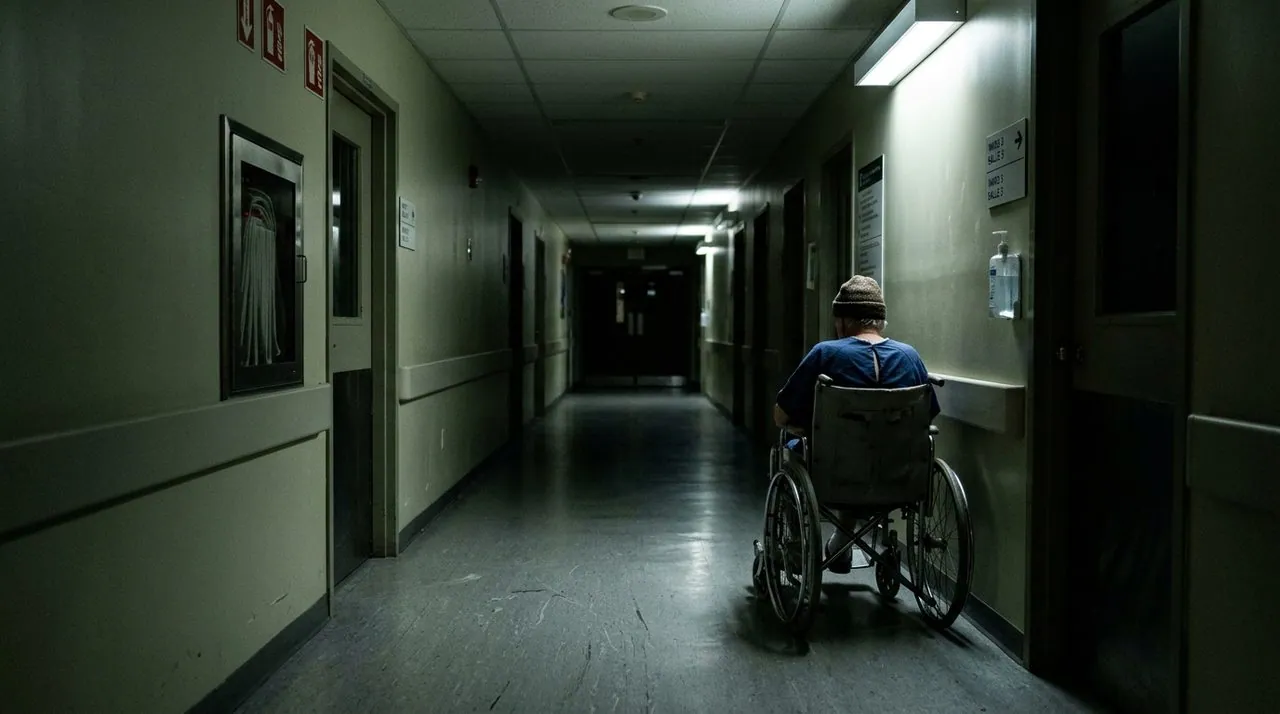
EDMONTON — A woman in her 40s waited 13 hours in an Edmonton emergency room with chest pain and difficulty breathing before being assessed by a doctor. The posted wait time on the tracking board remained stuck at five hours throughout her entire ordeal. She messaged a friend, emergency physician Dr. Paul Parks, to ask if she should leave. "You need to stay," Parks advised her. "Bad things could be happening."
Parks, who practises in Medicine Hat, said about half a dozen friends or acquaintances reached out to him over the summer due to extremely long ER waits. One person arrived post-tonsillectomy and bleeding from the throat, texting Parks after more than an hour to ask, "Am I going to bleed to death?" Parks said wait times this summer, routinely 12 hours or more, were unlike any he has seen in nearly three decades of practice. He recently announced his run for the provincial NDP nomination in Cypress-Medicine Hat.
The Canadian Association of Emergency Physicians warns that packed, overcrowded ERs are a worsening predicament that should be considered a public health emergency. Triage assessments are short and imperfect, and the risk of patients deteriorating unnoticed grows as waiting rooms become more congested. A shortage of hospital beds is increasingly singled out as a root cause of a system frontline staff describe as increasingly hanging by a thread. "If a province doesn’t commit to and follow through rebuilding hospital bed capacity, then they’re bulls, ting when they say they want to address the ER crisis," emergency physician Dr. Brian Goldman posted on X. Long-term care also needs an overhaul, as a lack of beds there prevents the discharge of elderly patients to free up hospital space.
Canada has among the fewest hospital beds per capita compared to other OECD countries, with 2.5 beds per 1,000 population in 2023. That is down from 6.75 per 1,000 in 1985. The OECD average is 4.2 beds per 1,000 people. Canada also has the highest occupancy rate of those acute care beds among OECD countries at 91 percent, and among the lowest number of ICU beds at 13 per 100,000 population.
According to Statistics Canada, the country's total population grew by 53 percent between 1985 and 2023. Over the same period, the total number of hospital beds declined by 43 percent, according to OECD figures. From 2005 to 2023, the population grew by 29 percent while the total number of beds grew by just 0.05 percent. The number of people over 65 grew by 92 percent in that 20-year period.
"Even though a great majority of seniors are probably living more vibrant lives than they ever have before, a chunk of them are sick," said Ottawa emergency physician Dr. James Worrall. "It doesn’t have to be a huge chunk to overwhelm capacity." Over the past decade, total beds have increased slightly but not as fast as population growth. The Canadian Institute for Health Information reported 98,376 staffed and in-operation beds for the 2024-2025 fiscal year, a two percent increase over the previous year.
Building more beds is not enough if there is no one to staff them. In Ontario, 215 registered nurse positions were cut over a recent two-month period alone. Hallway medicine is also creeping onto hospital floors, with surgery patients being moved into hallways to make space for new admissions. A new Canadian study of surgical nurses' experiences reports on the "moral weight" of performing procedures like changing dressings in hallways, which increases infection risk. When hospitals hit 100 percent capacity, as they now routinely do, "you’re in disaster mode," said New Brunswick emergency physician Dr. Fraser Mackay. The internationally accepted standard is 85 percent capacity to leave flexibility for unexpected surges in demand.