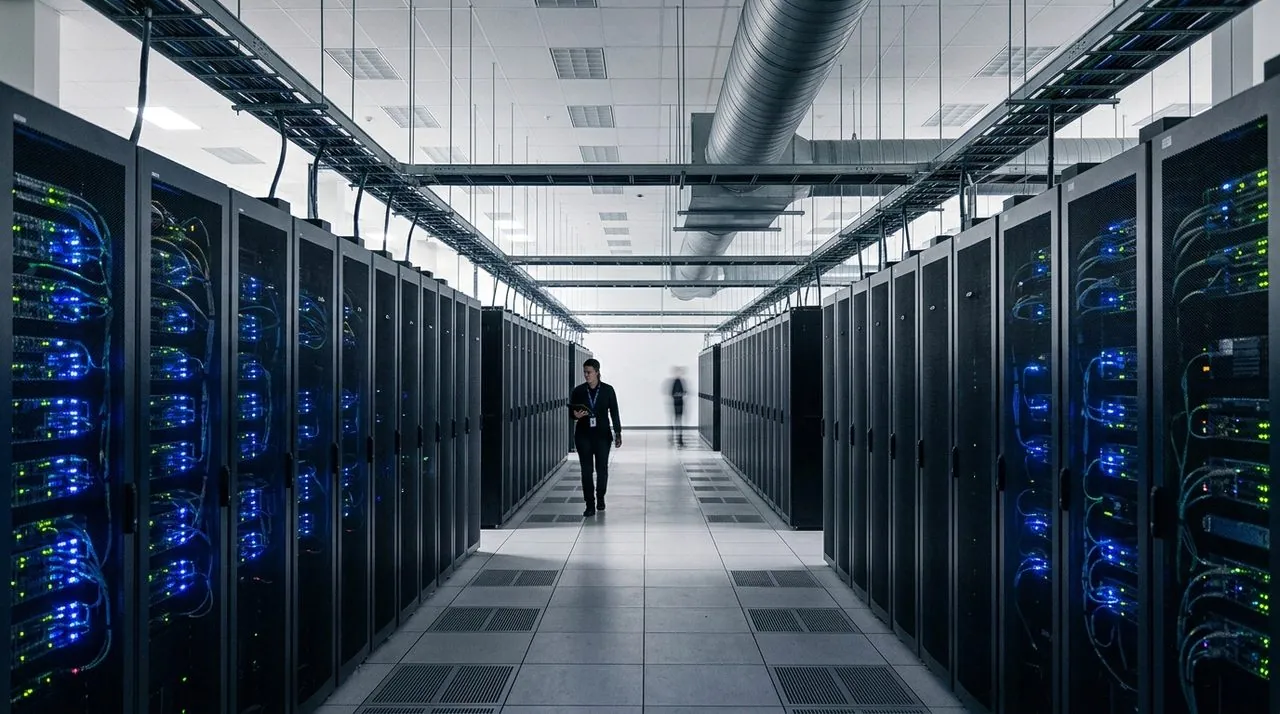
WASHINGTON — President Donald Trump threatened to impose a "tremendous tax" on American technology companies that build artificial intelligence data centres in other countries. The president made the remarks during a wide-ranging news conference at the White House on Friday, following his return from an Asia trip that included a trilateral meeting with the leaders of China and Russia. Trump provided no details on how the tax or other penalties would work and said he had not yet discussed the policy with his staff. He framed the move as a way to keep advanced AI technology, which he calls "super intelligence," in American hands.
"We're not going to allow companies to build data centers in other countries," Trump said. "If they do that, they can, but we're going to put a tremendous tax on them." He argued that allowing critical technology like computer chips to be built overseas had been "very destructive to our country." The comments come days after his administration issued new rules restricting remote access to advanced U.S. computing chips and servers, a step aimed at limiting China's ability to use American technology to train AI models. Trump claimed the U.S. is "10 years ahead of China in chipmaking."
Urging communities to make deals
Despite his threat to tax overseas development, Trump urged American communities to welcome data centre construction at home. This advice follows a midterm election cycle where anti-data centre sentiment proved potent, with voters rejecting local proposals and helping Democrats gain control of Congress. Trump told communities to negotiate aggressively with developers. "You ought to take advantage of the data centers. ... They're tremendous assets," he said. "And you're going to make a lot of money. You're going to have your taxes reduced. They're going to build their own electricity so the electricity is going to go down. ... Make the deal. They have plenty of money. Take it."
The tech industry has responded to the political backlash by ramping up financial incentives and promises of transparency. Officials with Google and Meta told The Associated Press they are trying to address community mistrust. Companies are also pledging to reduce environmental impact and boost local property values while arguing AI is a positive force for the economy. A tougher regulatory environment for AI giants and data centre developers is expected under the new Democratic congressional majority, even if Trump, a champion for the industry, stalls federal action.
Open to bipartisan deals
Trump said he is prepared to use his veto power on legislation from the incoming Democratic majority but left the door open to bipartisan cooperation in some areas. He said there are those who believe more could get done because some Republicans were impossible to deal with. He pointed to healthcare as a potential area for compromise, saying he is open to great healthcare that could be a combination of what everyone wants. Trump also said he is working with Democrats on tax incentives for the movie and television industries and has heard from them about potentially pursuing immigration reform.
The president also addressed his administration's push for more than $50 billion to overhaul the nation's air traffic control system. He told reporters he advised Transportation Secretary Sean Duffy to limit upgrades to the existing system to avoid wasteful spending before a new system is built. "I said, 'Sean, let's not spend money to patch up all over the place, because when we get the new system everything's going to be torn out,'" Trump said. "So let's not spend the $12 billion. Spend as little as you can to keep it going until we get the $12 billion." Congress has already questioned the $50 billion request and how $12.5 billion in prior funding is being spent.
Trump praised bipartisan Senate legislation aimed at speeding up permitting for power plants and transmission lines, which would also require data centres to pay for the energy they use and grid upgrades. "It's going to cause tremendous amounts of new building," he said. On other topics, Trump defended Vice President JD Vance's statement blaming Republican midterm election losses on the Iran war, calling it "fine" and "very accurate" but said Vance should have added that he would still go to war to prevent a nuclear-armed Iran. Trump also boasted about the new Air Force One, touted falling energy prices and new trade deals, and again blamed the Federal Reserve and the Biden administration for economic issues.
He insisted the Republican midterm losses were not his fault. "The world is not happy about the people that did well in the election," Trump said. "I wasn't on the ballot." He claimed the outcome would have been different if he were, saying, "If I were on the ballot, it would have been a whole different story."